
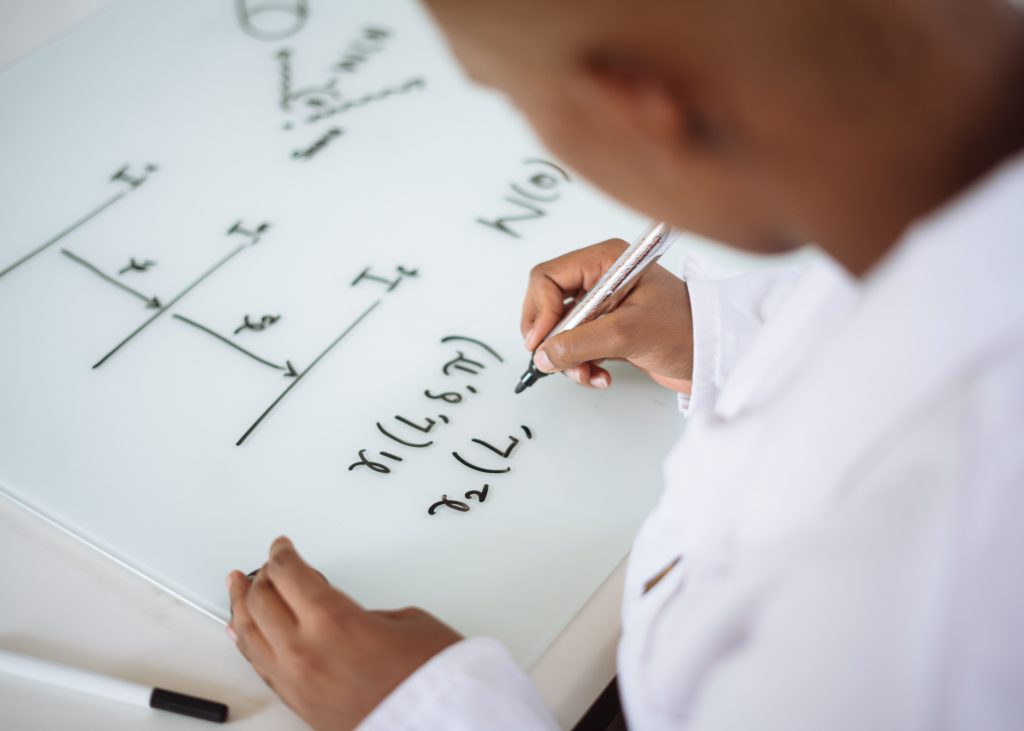
Hey there, South Africa! Are you ready to dive into the world of numbers, shapes, and equations? Don’t worry, we’re not going to bombard you with complex mathematical problems. Instead, we’re going to help you understand why some of us struggle with maths, with a dash of Mzansi flavour!
1. The Scary “Maths Gwababa”!
“Maths gwababa”, or math anxiety, is a real thing, believe it or not! It’s like that tense feeling you get when the Proteas need six runs off the last ball. Up to 50% of people across the globe experience this, and it often leads to lower performance and a lack of self-belief in one’s maths abilities (Beilock & Maloney, 2015). So next time, don’t be too hard on yourself; remember, even AB de Villiers feels nervous sometimes!
2. Wobbly Building Blocks
Learning maths is like building a tower with toy blocks. If your base is wobbly (basic mathematical concepts), your tower (advanced maths knowledge) will struggle to stand. The National Mathematics Advisory Panel (2008) found that not being friends with whole numbers and fractions is a common reason why many struggle with algebra.
3. Teacher’s Chalk and Talk
Remember that teacher who would just go on and on, with you understanding nada? Research shows that traditional lecture-style teaching doesn’t gel well with maths learning (Hattie, 2009). Teachers who make maths come alive with real-world examples and exciting problems to solve help students perform better. It’s like learning cricket by playing in a match, rather than just reading about it!
4. Practice Makes Perfect, Chommie!
Just like perfecting the Diski dance or your braai skills, maths requires practice. According to a study by Rohrer and Taylor (2006), regular practice over time (like playing a bit of soccer every weekend) is more effective than cramming all the learning into one go (like trying to learn all the Diski dance steps the night before a big match).
5. Money Matters
Where you come from and what resources you have can affect your maths scores. The National Center for Education Statistics (2019) found that learners from less privileged backgrounds tend to score lower in maths tests than their more affluent peers. It’s like having to play a cricket match without proper gear – it’s a lot tougher, but that doesn’t mean you can’t hit a six!
6. Maths, My Old Foe
Our attitudes towards maths can have a big impact. If we see maths as a foe rather than a friend, we’re likely to struggle more (Ma and Kishor, 1997). So, let’s try to make peace with maths, just like we have with our traditional rivals in rugby, the All Blacks!
7. The Language of Numbers
For those of us who speak isiZulu, isiXhosa, Sesotho or any of our other beautiful languages at home, learning maths in English or Afrikaans can be tricky. A study by Abedi and Lord (2001) showed that learners who are not native speakers of the language used to teach maths often find the subject more challenging.
So, there you have it, folks! Maths can be a tricky subject, but knowing what makes it tough can help us to tackle these challenges head-on. Whether you’re a maths whizz or a newbie, remember – every problem has a solution. Let’s embrace the maths monster together, Mzansi-style!
Unlock Your Child's Potential with Tailored Learning Solutions